

Busy weekend for B.C. Wildfire Service
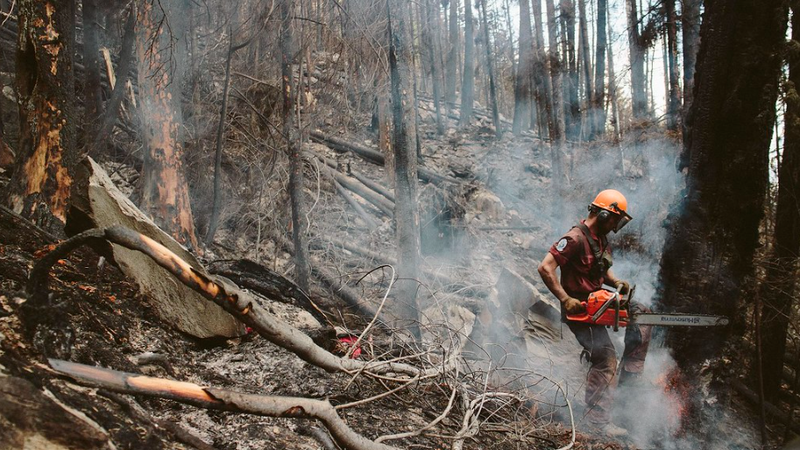
The B.C. Wildfire Service had a busy long weekend with 46 fires sparking throughout the province between Friday, June 30, and Monday, July 3.
The BCWS stated quick action was taken by air and ground crews and that 35 of those new fires were either out, under control or being held as of Tuesday, July 4.
A report from the service noted 30 per cent of the fires over the long weekend were human-caused.
The majority of the fire activity was located in either the Prince George or Coastal fire centres, though the BCWS did not provide weekend-specific breakdowns for the regions in its report.
The long weekend fires bring the total for this season to 621, which have burned 1,043,499 hectares.
Comparatively, during the same period of time in 2022 there were 229 fires that burned 4,911 hectares. The 10-year average for this point of time was reported at 449 fires and 41,164 hectares burned.
The 2023 figure includes the Donnie Creek wildfire north of Fort St. John, which is the largest in B.C.’s history at an estimated 571,512 hectares as of the morning of July 4.
In the Kamloops Fire Centre, which includes Vernon and the Okanagan, there have been 103 fires that have burned 1,524 hectares.
The Prince George Fire Centre had the most activity this year with 222 fires burning 1,029,976 hectares.
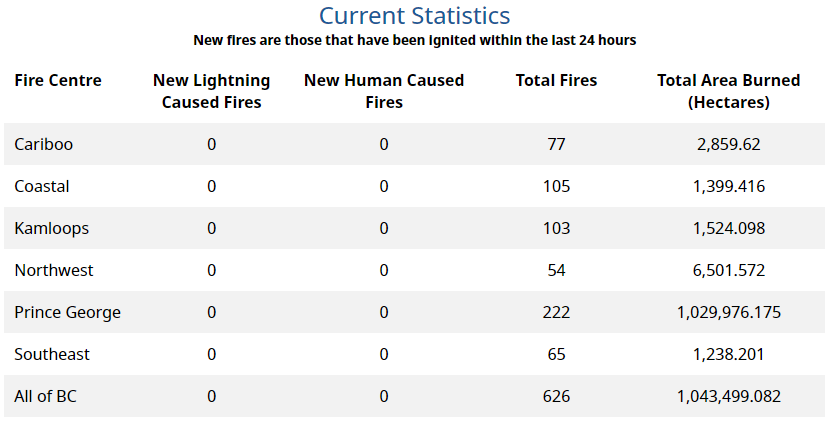 Statistics on wildfires in B.C. as of Tuesday, July 4. (graphic courtesy of the B.C. Wildfire Service)
The BCWS reports that 283 of the fires that have sparked this year were caused by lightning strikes, while 309 were human-caused, which can include industrial activities, vehicle and engine use, discarding burning materials like cigarettes, and lighting fireworks, sky-lanterns, and outdoor fires. It also noted the cause for 34 of the total fires this year have not been determined.
Looking ahead, the weather forecast calls for more warm, dry conditions in the coming week.
There will also be a high pressure system settling over B.C. that will continue to dry fire fuels, particularly in the Interior and Vancouver Island, which will increase the risks of fires sparking.