

Officials warn high risk of wildfires persists
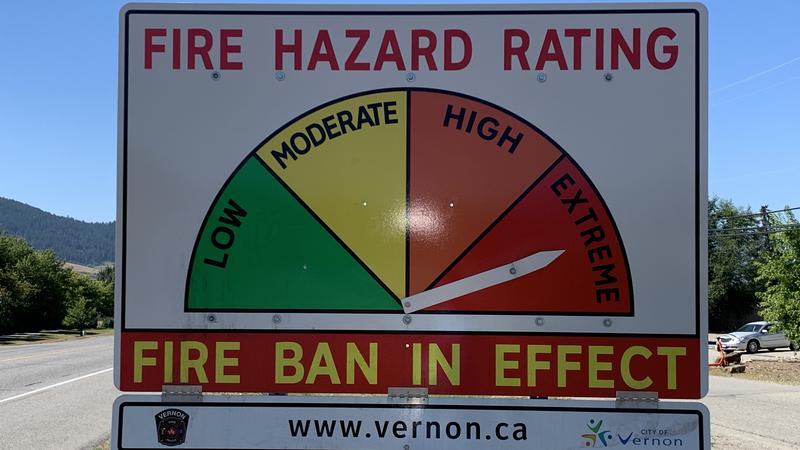
British Columbians are being warned the province is expected to see increased wildfire activity due to persistent dry and hot conditions.
Matt MacDonald, lead forecaster for the B.C. Wildfire Service (BCWS), said June was very hot and dry, with the majority of the province, including the Kamloops Fire Centre, seeing daily temperatures one or two degrees higher than average, with 70 to 80 per cent less precipitation that normal.
He said those trends are expected to continue through to the end of the summer.
“This represents the potential for temperatures to be above normal from mid-July right through the middle of August, so really the core of our fire season, so we have pretty good confidence that these temperatures we have been seeing are going to persist as we head into the second half of July and the beginning of August,” MacDonald stated.
“From a precipitation perspective, same thing here. The potential for dryer than normal conditions are likely to persist through the latter half of July and into August, so not only will it continue to be warm but most likely continue to be dry.”
MacDonald added long-range precipitation forecasts are not always accurate, but did state July and August are typically the driest months of the year for the majority of B.C.
MacDonald said most of the province, including much of the Okanagan, have above-average fuel loads and drought conditions. Other areas with similar conditions include the north eastern part of the province, central B.C., the mid-coast and the north of Vancouver Island.
He said hotter weather is set to hit much of the province over the next 10 days, and there is a risk of lightning strikes coming to the entire province, primarily in the southern half, which enhances the risk of fires sparking.
“Thursday, Friday and Saturday (July 6-8) we’re going to have three successive days of widespread lightning across the province into what are some very receptive fuels,” MacDonald stated, adding fuels in some places, including the Okanagan, may be “adaptive,” meaning they will hold onto the heat from a lightning strike and ignite at a later time.
“So a very active pattern we’re heading into. We’ve got the heat, we’ve got the dryness and we’re going to be throwing that lightning across most regions of the province, so likely to see a large number of starts here in the weeks to come.”
MacDonald added the Knox Mountain fire in Kelowna on Canada Day was a great example of the receptiveness of fuel loads.
“That was a human started fire and it really took off. Upon deployment it had already grown to two hectares in size and within two hours of ignition, it had grown to six and a half hectares,” MacDonald explained.
“So again it reflects the receptibility of our fuels and the aggressive fire behaviour once those fires start.”
He added the wind that day also attributed to the fire growth.
Cliff Chapman, director of provincial operations for the BCWS, said preparedness is key as the warm and dry conditions persist or worsen in the coming months.
“Make sure you and your family are prepared for what might come and what that means is have an emergency plan ready for you and your family,” Chapman explained.
“Have a grab-and-go kit readily available packed with your important documents, your important contact information you may need should you be placed on an immediate evacuation order and you’re going to have to leave your home.”
Chapman also encourages people take action around their properties to protect them from fires, and advised people visit the FireSmart website to learn more about these activities, such as keeping the grass cut, not storing flammables close to structures, and clearing leaves and debris from gutters.
He added there has now been over a million hectares of terrain burned in B.C. this wildfire season, with the majority being in the northeast of the province.
“Crossing over the million hectare threshold this early in the season is quite significant. It now ranks as the third most hectares burned in any fire season in B.C. since we started to track,” Chapman said.
The BCWS will be receiving additional resources from the United States and Mexico to assist with fire suppression this week, primarily in the Prince George Fire Centre.
He added public reporting has been crucial in identifying and responding to wildfires so far this season, and encourages people to continue to report incidents by calling 1-800-663-5555 or dialing *5555 on a cellphone.
Effective Friday, July 7, the BCWS will implement campfire bans across the province, including in the Kamloops Fire Centre.
The City of Vernon has also announced it will put a municipal campfire ban in place to coincide with the regional prohibition.