

Holiday hints to keep your pets safe
The holidays can be a magical time for the whole family including our fur babies, but with a number of new things being introduced to our homes, it can also be a dangerous time, especially for kittens and puppies, experiencing these things for the first time.
Vernon Matters checked with the BC SPCA for the best advice on holiday safety for felines and canines.
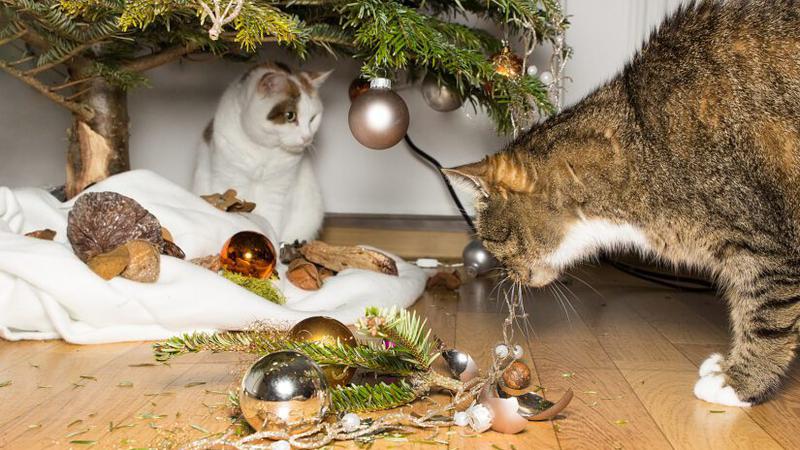
A Christmas tree with tinsel and a curious pet can spell trouble. Make sure your tree is well-secured, and try to place the decorations above paw height. Using strings to hang decorations instead of hooks can help, as hooks can easily become dislodged. If possible, use non-breakable ornaments.
Tinsel and angel hair are decorations that, if ingested by your pet, can cause intestinal problems. Also, don’t forget those lights. Cords should be inaccessible to pets, especially chewing puppies and exploring kittens.
If swallowed, wrappings such as ribbon or string can cause digestive and intestinal issues. Once unwrapped, keep small toys out of harm’s way, as they can present a choking hazard.
Finally, if you add chemicals to the water reservoir of your Christmas tree to help it last longer, keep in mind that those chemicals are toxic to animals, so it’s best to keep the reservoir covered.
Intoxicants: If you and your friends are celebrating over the holidays, be sure to keep anything that might cause harm to your pet out of reach. This includes foods that are toxic to animals, alcohol, marijuana (or anything containing THC, the psychoactive component in cannabis), and other intoxicants. If ingested by pets, these toxic substances can cause seizures, a coma, organ failure, or even death.
Food: Humans may enjoy chocolate, but it contains theobromine, a chemical that can be deadly to cats and dogs. While it may be tempting to feed your doggo human food under the table, the best thing you can do for your pet is to keep them on their regular diet, as high-fat foods can cause pancreatitis, etc. Additionally, Xylitol an artificial sweetener found in products such as gum, candy, and mints, is often fatal if ingested by your pet.
Poultry bones: Avoid giving bones to your dogs or cats, particularly turkey bones. Poultry bones can easily splinter and cause serious injury, while bone fragments could cause intestinal blockages or lacerations. Keeping your garbage out of your pet’s reach is also key.
Learn what other foods to avoid giving to your pet:
A number of holiday plants are poisonous to animals. This includes mistletoe, holly, ornamental pepper and Christmas rose. Be sure these plants stay out of the reach of pets — especially birds. Contrary to popular belief, Poinsettias are not poisonous to pets or people. It may be better to avoid them, though, as they can irritate the tongue and stomach when consumed and occasionally cause vomiting as well.
Avoid purchasing pet toys with small or soft pieces that can be chewed and swallowed. Nylon bones tend to splinter less than plastic ones. You should be inspecting your pet’s toys regularly and discarding deteriorating ones.
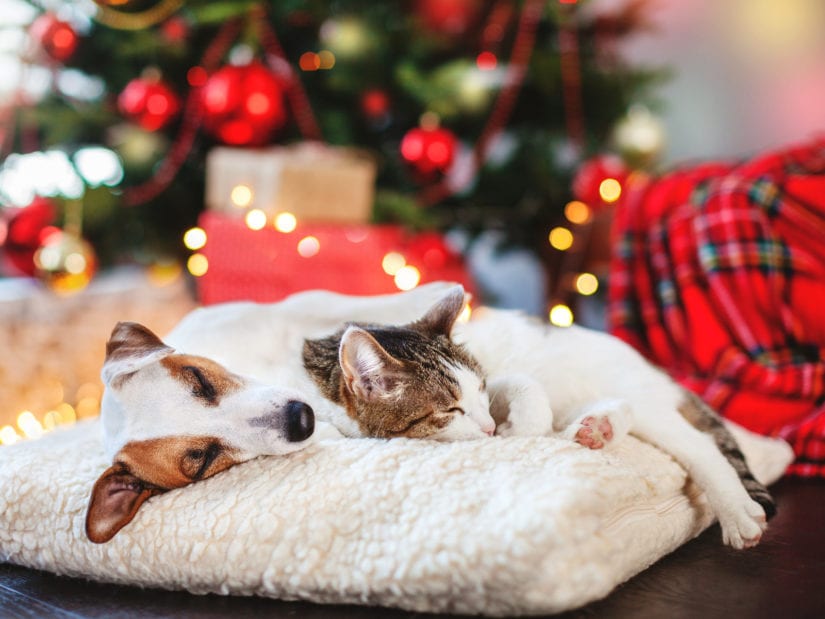 Cat and dog sleeping by the Christmas tree (BC SPCA image)
For many, New Year’s Eve is a time to celebrate, and often the festivities include fireworks. For animals, however, exploding fireworks make New Year’s Eve one of the most terrifying nights of the year.
The SPCA has several tips to pro-actively protect your pets.
- Keep your pets indoors and ensure they feel safe and comfortable. If you are having company over, be mindful when you are opening the door, as your pet may try to escape. If possible, keep them in a separate room with their favourite toys and comforts.
- Talk to your vet. If you know your pet gets anxious or scared when fireworks are happening, talk to your vet about anti-anxiety options, in advance.
- Talk to your neighbors. Consider asking them to give you advance notice of fireworks celebrations. This will give you time to ensure your pet is indoors and safe when the pyrotechnics go off.
- Ensure your pet has at least two forms of identification in case they go missing. Pets should have a collar with tags from DocuPet through the North Okanagan Regional District and an ear tattoo or a microchip registered with the BC Pet Registry.
- If you must take your dog outside to relieve himself, make sure he’s appropriately leashed or, better yet, harnessed. Hold tight to the leash, even in your backyard, to keep him from bolting.