

Cooler weather may bring some reprieve to Okanagan wildfires, though risk still high
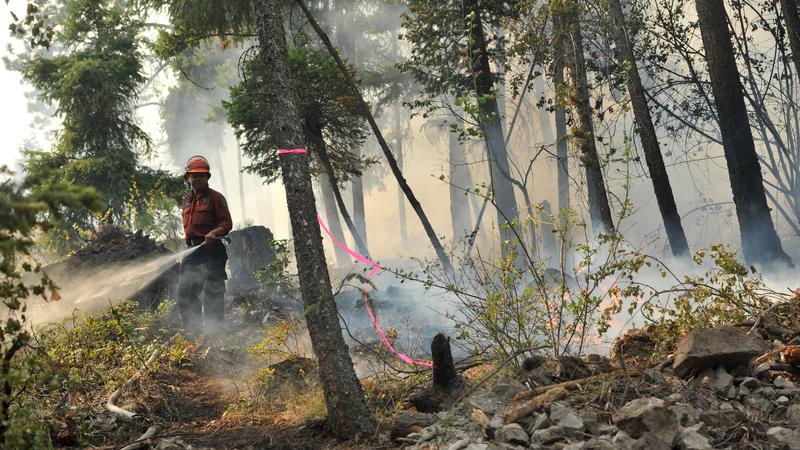
Firefighters battling blazes in the Okanagan and Southern Interior may see some relief in the coming days.
“This week, the weather is expected to be mixed across British Columbia,” Minister of Forests Bruce Ralston stated at the provincial fire update Monday, August 28.
“In the north, a ridge of high pressure will likely cause continued high temperatures over the next few days, while in the south, it is possible some significant rain may reduce wildfire risks.”
Cliff Chapman, operations director for the B.C. Wildfire Service (BCWS), added should the conditions change as forecasted, some resources may be moved from the south to assist with firefighting operations in the northeastern part of the province as needed.
“We’ve seen this sort of shift, we saw it earlier in the year when went from the north and then we saw activity in the south while the north got a little bit of reprieve with some rain,” Chapman stated.
“What we’re experiencing right now, and as we get through Tuesday and Wednesday of this week, is the reverse of that, so the south is likely to see rain. I think we’re all hopeful it will be a significant amount of rain, while the north is forecasted to stay hot and dry, which it already has been for the last number of days. So to put it bluntly, yes we are looking at all of our resourcing and allocations of those resources.”
Ralston also noted the Canadian Armed Forces’ Land Task Force will be assisting with the fires in northeast B.C.
Additionally, though some cooler wetter weather is in the forecast, Ralston said the wildfire season is ongoing and people still need to be vigilant and cautious of their activities to not spark new fires, as well as to follow all evacuation alerts and orders.
During the press conference Monday, Minister of Emergency Preparedness and Climate Readiness Bowinn Ma acknowledged the fires in the Okanagan are a cause of concern and some challenges have arisen as a result of the fires.
“Over the past weekend, numerous evacuation orders have been downgraded and rescinded in parts of the Okanagan, but we are still in very challenging and dynamic times,” Ma said.
“As of [Monday] morning, there are more than 8,000 people on evacuation order and nearly 54,000 people on evacuation alert. The B.C. Wildfire Service, local governments and First Nations are working diligently to assess the situation and make sure areas are safe before people can return to their home.”
Ma advised people have their grab-and-go bags at the ready and emergency plans in place should situations escalate and further evacuation alerts or orders are issued, adding people need to abide to any orders and leave the area immediately.
“This helps protect your community, your family, yourself and emergency management personnel,” Ma said.
“I want to thank everyone who has been following the evacuation orders. I know that it is stressful, I know that it is difficult, but it is incredibly important and it is the law.”
Ma noted the wildfires are creating smoky skies in much of the province, including in the Okanagan, and advises people, especially those most vulnerable like the elderly, people with pre-existing health conditions, and children, to limit their time outdoors and avoid strenuous activities if possible.
People who have evacuated their homes can access supports at their local emergency operations centres, which are being supported by the province, and Ma said anyone who has left their homes but are not being supported should register with Emergency Support Services at 1-800-585-9559.
Ma added mental health resources have also been bolstered in the Southern Interior by dispatching disaster psychological support teams to reception centres. People can also seek support 24/7 by calling the B.C. Mental Health Support Line at 310-6789, and youths struggling with mental health can seek support through Foundry B.C.
As of Monday, there were 376 active wildfires in B.C., 12 of which were fires of note. Among that classification were the McDougall Creek wildfire near West Kelowna, the Bush Creek wildfire in the Shuswap, the Rossmoore Lake fire south of Kamloops, and the Upper Park Rill Creek and Crater Creek wildfires near Keremeos.
To date, a total of 1,947 wildfires have burned 1,809,979 hectares of land in B.C.
In the Kamloops Fire Centre, there have been 368 fires that have burned 185,661 hectares this season.
The BCWS stats show 1,392 of B.C.’s fires this season have been caused by lightning, and 444 were human-caused. The causes of the remaining 111 fires remained unknown at time of publication.
RELATED NEWS: McDougall Creek fire damage rises and more work needed before people can safely return home