

Penalties increased for commercial vehicles to prevent infrastructure crashes
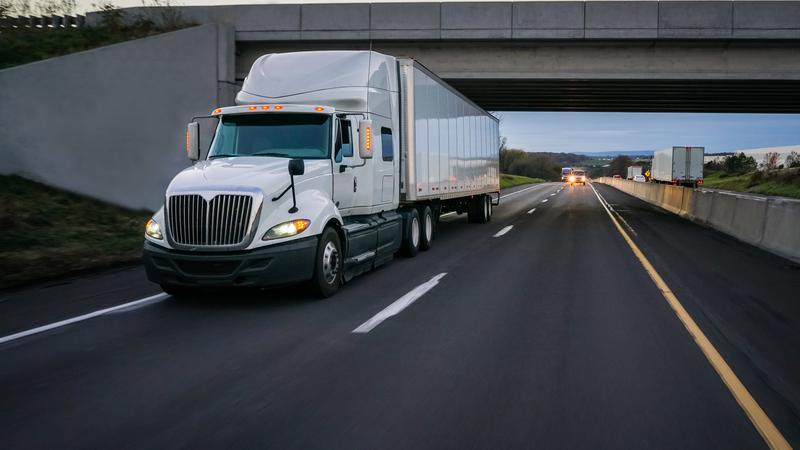
The provincial government is increasing deterrents to prevent unsafe practices in commercial vehicle operations and to protect critical infrastructure.
As incidents involving commercial vehicles can cause costly damage to critical infrastructure, such as colliding with an overpass or bridge, as well as cause traffic disruptions, delay the movement of goods, and create safety risks to all road users, the province announced Thursday, Dec. 14, that enforcement of commercial vehicle regulations were being increased.
“Tougher regulations, bigger fines, and robust enforcement. And we are requiring new technical requirements including warning devices and speed limiter technology on every commercial truck in the province,” Rob Fleming, Minister of Transportation and Infrastructure, announced.
“We’re introducing strong deterrents for those very few, and I want to stress very few outliers, those very few unsafe commercial drivers and the companies that employ them. Companies that are involved in infrastructure crashes will now see escalating consequences for repeat offences.”
Fleming stated fines for drivers involved in infrastructure collisions will increase to $575 per offence, and that companies involved in repeat incidents would have to halt operations temporarily to undergo safety investigations. Following that process, should incidents continue to occur, the company would have to temporarily stop work again for a safety audit to be conducted, and after that, any further incidents could result in the company losing its Carrier Safety Certification.
“The changes that we bring in will bring new and higher fines and hold carriers more accountable,” Fleming said.
“New offences will address overheight vehicles and loads. The new fines for offences will more than quadruple to be the highest in Canada. We will also use a Progressive Enforcement Network framework that takes stronger action against companies with vehicles that crash into a bridge or overpass or other highway infrastructure.”
These new regulations and penalties were supported by a trucking advocacy group in the province.
“These incidents are very rare. The women and men that work in this industry take great pride in their work, and it’s only a few outliers that cause these serious incidents, and that’s why this enforcement strategy is so focused on dealing with those outliers,” Dave Earle, President and CEO of the B.C. Trucking Association, said during the announcement.
“We applaud the work the ministry has done to be transparent, that they have done to increase penalties, and particularly, when we start looking at repeat infractions, the ability to remove that fleet’s operating certificate is really critical. What that means is that fleet will not be able to operate in the province until such time as they can show that they have got their processes and procedures in place and together. That is a real, tangible and immediate consequence for behaviour that we simply cannot accept.”
The Transportation and Infrastructure Minister added that, along with the additional penalties, actions were being taken to prevent these types of incidents from happening in the first place.
“We will now require dump-style vehicles to have in-cab warning devices to alert a driver if a dump box is raised while the vehicle is in motion,” Fleming said.
“We’re also going to deter trucks from excessive speeding, moving dangerously fast on our road networks. We’re bringing in new regulations to require trucks to have speed limiters, this will improve safety by preventing heavy commercial vehicles travelling more than 105 kilometres per hour on B.C.’s highways.”
Commercial vehicles will also need to be equiped with electronic logging devices.
Fleming added the new DriveBC Height Clearance tool has been launched, which allows commercial truck drivers to enter the height of their vehicle and their starting point and destination, and then be provided with a route where there would be no risk of overhead collisions.
There will also be new fines associated with the safety requirements for commercial vehicles, such as fines for non-compliance with the speed limiter and for tampering with the devices.
“But, of course, even with the new rules, even with the new tools and the new technology, there is a need for enforcement on the roads,” Fleming stated.
“That’s why we have increased patrols to enforce the height restrictions that are in place. Officers from the Commercial Vehicle Safety and Enforcement Unit are out in full force to promote compliance with all the rules around mechanical safety and driver behaviour. They are educating commercial vehicle drivers about all their responsibilities, they’re pointing out all the resources available to reduce the risk fo a crash, and the officers will issue violation tickets when the rules are broken and a follow up is necessary with repeat offenders.”
The changes will make the fines for infrastructure crashes in B.C. the highest in Canada, though Fleming noted legislation was being reviewed to see if there was the possibility of increasing them even further should incidents continue in the future.